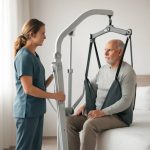
The transition from sitting to standing is one of the most fundamental and recurring movements in daily life. For individuals recovering from surgery, living with chronic mobility impairments, or experiencing age-related weakness, this simple act can become a daunting and risky endeavor. Traditional manual lifting techniques, often reliant on the physical strength of one or two caregivers, place immense strain on both the patient and the helper. This is where the electric sit to stand lift emerges as a transformative solution. These devices are not merely tools for transfer; they are engineered instruments that prioritize patient dignity, safety, and caregiver longevity. Unlike sling lifts that require full non-weight-bearing support, sit-to-stand lifts are designed for patients who possess some degree of weight-bearing capacity and trunk control. By mechanically guiding the user through a natural standing motion, these lifts eliminate the awkward, unbalanced pulls that often lead to falls, skin tears, or back injuries. The core value proposition is clear: enable a safer, more controlled transfer that honors the patient’s remaining abilities while drastically reducing the physical toll on the care team.
The Engineered Precision of an Electric Sit to Stand Lift
Understanding what makes these devices so effective requires a look at their mechanical and ergonomic design. At the heart of the system is a powerful, battery-operated motor that drives a hydraulic or screw actuator. This mechanism smoothly elevates the lifting arm, which is connected to a padded vest or chest strap worn by the patient. The base of the lift is designed with two critical components: a stable, wide footprint and a set of knee pads. The user positions themselves at the edge of the bed or chair, with their knees gently braced against the pads. This knee support is a key differentiator; it prevents the patient from sliding forward and provides the necessary counter-leverage for the lift to raise them into a standing posture. The footplate is also adjustable, accommodating various shoe sizes and helping to align the patient’s hips, knees, and ankles for a biomechanically sound stance.
The electric actuator offers a distinct advantage over manual hydraulic pumps. With a hand control or pendant, the caregiver can initiate the lift smoothly and at a controlled speed, responding instantly to the patient’s comfort level. This is particularly important for individuals with joint stiffness, pain, or fear of falling, as any abrupt movement can cause anxiety or muscle guarding. Modern units are equipped with emergency stop buttons and manual backup systems, ensuring that a power failure never leaves a patient suspended. The weight capacity of these lifts is also a critical specification. Most high-quality models, such as those found in dedicated collections like an electric sit to stand lift, can safely handle patients up to 400 or even 500 pounds. This range accommodates a wide spectrum of bariatric needs, a common requirement in long-term care and rehab settings. The frame construction typically uses steel or heavy-duty aluminum, balancing the need for strength with manageable weight for portability. Casters on the base are another thoughtful engineering touch: locks on the rear wheels provide stability during the lift, while swivel front casters allow for easy repositioning and transport between rooms. The entire system is designed to minimize the shear forces and friction on a patient’s skin, which are primary causes of pressure injuries during transfers. By keeping the patient upright and engaged in the movement, the lift reduces the risk of these painful and costly complications.
Clinical and Operational Advantages in Real-World Care Settings
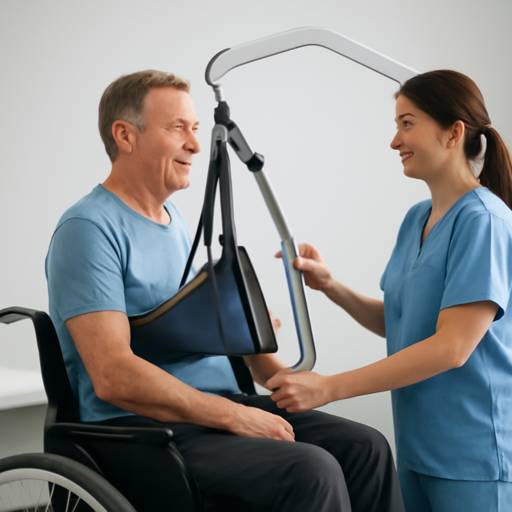
The impact of these lifts extends far beyond the physical mechanics of a transfer. In a skilled nursing facility or a home care environment, the adoption of an electric sit to stand lift goes hand-in-hand with a Safe Patient Handling (SPH) program. The most immediate and quantifiable benefit is the reduction of caregiver injuries. Musculoskeletal disorders, particularly lower back injuries, are endemic among nurses and aides. Repeatedly bending, twisting, and supporting a patient’s full body weight during manual transfers is the leading cause. By delegating the heavy lifting to a motorized device, the caregiver’s role shifts from physical lifting to guiding and supervising. The caregiver remains in a neutral, upright posture, using the hand control to manage the ascent and descent. This single change can cut the risk of a career-ending injury by a significant margin, improving staff retention and reducing workers’ compensation costs for healthcare facilities.
For the patient, the psychological and physiological benefits are equally profound. The ability to stand, even with mechanical support, is a powerful motivator in a rehabilitation program. It stimulates weight-bearing through the lower extremities, which is critical for preventing muscle atrophy, improving bone density, and enhancing circulation. Standing also facilitates better bowel and bladder function and can improve respiratory efficiency by allowing the lungs to fully expand. A patient who can stand can often participate more actively in their own care, such as pivoting toward a wheelchair or toilet, which fosters a sense of independence and control. Case studies from rehabilitation hospitals illustrate this point effectively. For instance, a patient recovering from a hip replacement who is restricted from fully bearing weight initially can use a sit-to-stand lift to safely get out of bed for the first time post-op. The lift provides the precise amount of support needed, allowing the surgical site to heal while preventing complications from prolonged bed rest. In another scenario, an elderly individual with Parkinson’s disease, who experiences freezing episodes while trying to stand, can use the lift to overcome that initial hesitation. The steady, predictable motion of the lift bypasses their motor initiation problem. These real-world applications highlight that the lift is not a crutch, but a tool for active engagement. It allows patients to participate in their own mobility to the fullest extent of their ability, which is a cornerstone of modern person-centered care.
Evaluating Key Features for an Optimal Transfer Experience
Selecting the right electric sit to stand lift requires a careful assessment of both the patient’s needs and the environment in which it will be used. Not all lifts are created equal, and the wrong choice can lead to frustration, ineffective transfers, or even safety hazards. One of the first considerations is the type of sling or harness system. While many lifts use a standard chest vest, more advanced models offer options for different patient physiques and conditions. A patient with a weak core may require a higher back support, while someone with sensitive skin might benefit from a padded, mesh-style vest that reduces heat buildup. The attachment mechanism is also crucial. Quick-connect clips or loops that are easy to attach and detach are essential for efficiency, especially when the patient is in a bed or wheelchair where space is limited. It is also wise to consider the compatibility of sling systems. Many facilities standardize on a single brand across all their lifts to simplify inventory management and staff training.
Another vital feature is the base spread range. The lift must be able to fit around the legs of a wheelchair, a recliner, or a commode. A powered base opening mechanism is a major convenience; the caregiver can simply press a button to widen or narrow the base legs, ensuring a stable fit without having to manually slide the legs into place. This feature is particularly valuable in tight bathroom spaces or bedside areas. The height of the knee pads and footplate should also be easily adjustable without tools. A patient with a shorter stature needs the pads positioned lower to avoid them digging into their thighs, while a taller patient needs a higher setting for proper knee alignment. Furthermore, the lifting range is critical. A lift that cannot raise a patient high enough to clear the seat of a tall wheelchair will be useless for that specific transfer. The battery life and charging system are operational cornerstones. Look for lifts with digital battery indicators and quick-charge capabilities. A lift that dies mid-transfer due to a depleted battery is a serious safety risk, not to mention an inconvenience. The best units provide ample emergency backup power and can be charged while plugged into a wall outlet, allowing for continuous use. Finally, consider the weight of the lift itself. While heavier lifts often offer greater stability and higher weight capacities, they can be difficult to push across carpet or over door thresholds. A balance must be struck between sturdy construction and maneuverability. Reviewing a dedicated collection of lifts that specifically address these clinical and practical nuances, such as a comprehensive electric sit to stand lift lineup, provides a valuable starting point for comparing these critical features against individual patient profiles and facility layouts.