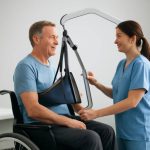
The modern healthcare landscape demands tools that prioritize both patient dignity and caregiver safety. Among the most transformative devices in this category is the power sit to stand lift. Unlike traditional ceiling lifts or full-body sling systems, this device is designed for a specific cohort of patients: those who possess some weight-bearing capacity and core stability but lack the muscular strength or balance to rise independently. The engineering behind these lifts has evolved significantly, moving from purely manual hydraulic systems to sophisticated electric models that offer micro-adjustments and intuitive controls.
At its core, the mechanism relies on a carefully calibrated pivot point. The patient is secured in a padded vest or sling, and the lift’s knee pad provides a stable fulcrum. As the motor engages, the lift’s arm rotates forward and upward, guiding the patient into a standing posture. The critical advantage of a powered system over a manual one lies in its consistency. A manual pump can introduce jerky movements if the caregiver exerts uneven pressure, but a power sit to stand lift uses a steady, predictable force that aligns with the patient’s natural movement patterns.
This technology directly addresses a long-standing issue in patient handling: the shearing force that damages skin and soft tissues during poorly executed lifts. When a patient is dragged rather than lifted, the friction between the skin and the bedding or chair surface can cause deep tissue injuries. Powered lifts mitigate this by maintaining the patient’s body in a neutral alignment throughout the transfer. The lift does not pull the patient; it supports the patient’s own effort to stand.
The Biomechanical Rationale Behind Assisted Standing Transfers
Understanding why a power sit to stand lift is effective requires a look at the biomechanics of rising from a seated position. The act of standing is a complex sequence involving the quadriceps, glutes, core stabilizers, and the vestibular system. For patients recovering from hip replacement surgery, stroke, or general deconditioning, this sequence can fail at any point. The knee might buckle, the torso might lean too far forward, or the patient simply may not trust their own legs.
The lift compensates for these failures by providing external stabilization where the internal system is weak. The knee pad prevents the patient from sliding forward and losing the mechanical advantage needed to extend the hips. The sling supports the thoracic and lumbar spine, reducing the load on the erector spinae muscles by up to 60% compared to an unaided attempt. This is not merely a convenience; it is a therapeutic intervention. By enabling a controlled, partial weight-bearing stance, the lift encourages muscle activation and proprioceptive feedback. The patient feels their feet on the floor, their legs engage, and their balance systems recalibrate.
In long-term care facilities, the absence of such a device often leads to a dangerous cycle. Staff may attempt a manual two-person lift, which increases the risk of both a patient fall and a caregiver back injury. Alternatively, they may default to using a full-body sling lift, which completely eliminates the patient’s contribution to the transfer. Over time, this lack of muscle engagement accelerates muscle atrophy and contributes to "transfer trauma"—the psychological fear of being moved. A properly executed power sit to stand lift breaks this cycle. It restores the patient to a standing position, even briefly, which is vital for maintaining bone density, circulation, and pulmonary function.
Research published in the Journal of Clinical Nursing indicates that patients who participate in weight-bearing transfers during rehabilitation show a 22% faster improvement in mobility scores than those who are passively transferred. The lift acts as a bridge, allowing the patient to practice standing in a safe, repeatable environment. For the caregiver, the mechanical advantage is equally pronounced. The motorized assistance eliminates the need for forceful pulling or lifting, reducing the spinal compression forces that contribute to the high turnover rate in nursing professions.
Clinical Application and Real-World Integration
Deploying a power sit to stand lift effectively requires more than simply purchasing the equipment. Facility-wide implementation depends on proper sling selection, patient assessment protocols, and staff training. The most common clinical error is using the lift on a patient who is entirely non-weight-bearing. A patient with a fractured femur or a complete spinal cord injury will not benefit from this device; they require a total body lift. Conversely, a patient with early-stage Parkinson’s disease, who can stand but may freeze or lose balance at the initiation of movement, is an ideal candidate.
A case study from a Midwest rehabilitation hospital illustrates the impact of correct implementation. The facility had a high incidence of patient falls during toilet transfers. They introduced a protocol where any patient scoring under 3 on the Functional Independence Measure for bed-to-chair transfers was automatically scheduled for a trial with a powered sit-to-stand device. Over six months, the facility recorded a 47% reduction in fall incidents during personal care routines. The staff reported a 35% decrease in self-reported musculoskeletal pain, particularly in the lower back and shoulders.
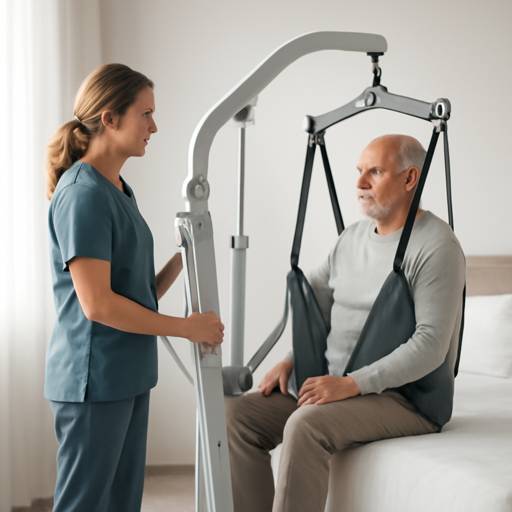
Another critical application is in bariatric care. Patients with a higher body mass index often face significant barriers to mobility. Manual lifts place extreme strain on caregivers, and standard slings may not provide adequate support. A heavy-duty power sit to stand lift with a capacity of 600 pounds or more allows a single caregiver to manage a transfer that previously required three or four people. This not only improves the safety of the patient, who no longer risks being dropped due to uneven manual lifting, but also preserves the dignity of the patient, who can stand with dignified support rather than being hoisted horizontally.
For home care environments, portability and battery life become paramount. Many powered models now offer integrated lithium-ion batteries that allow for a full day of transfers without being plugged in. This is essential for patients who need to move between multiple rooms or who live in older homes without accessible electrical outlets near their bed or chair. The ability to seamlessly navigate from a bedroom to a bathroom without reconnecting cables transforms the daily routine from a stressful event to a manageable procedure.
When selecting equipment, the clinical team should evaluate the range of motion offered by the lift. Some models provide only a simple upward pivot, while advanced units incorporate a slight forward lean that mimics natural movement. The latter is often preferred for patients with compromised lung function, as the forward lean opens the chest cavity and facilitates easier breathing during the stand. Regardless of the specific model, the core value remains the same: the power sit to stand lift is a tool for functional restoration, not just patient transportation. It actively involves the patient in their own recovery while protecting the caregiver from cumulative injury.
For teams looking to upgrade their current patient handling arsenal, evaluating a power sit to stand lift from a reputable supplier ensures access to the latest safety features, such as emergency lowering functions, anti-tipping bases, and slings designed to prevent skin breakdown. The investment in this technology pays dividends in reduced worker compensation claims, improved patient satisfaction scores, and shorter rehabilitation times.
Beyond the Device: Training and Environmental Factors
Even the most advanced machinery is only as effective as the system that supports it. One often overlooked aspect of using a power sit to stand lift is the physical environment where the transfer occurs. The lift requires a clear path from the patient’s seated position to the standing destination. Cluttered rooms, low-hanging medical equipment, and uneven flooring can all compromise the safety of the transfer. Facilities must conduct environmental audits to ensure that the turning radius of the lift is unobstructed and that the base of the lift can be placed flush against the bed or chair.
Equally important is the training of the care team. A common mistake is placing the knee pad too high or too low on the patient’s legs. If the pad is too high, it can dig into the popliteal fossa (the back of the knee), causing discomfort and potentially damaging the patellar tendon. If it is too low, the pad provides inadequate support, causing the patient to slide forward. Proper technique dictates that the knee pad should sit just below the patella, distributing force across the tibial tuberosity. Staff must be trained to make this adjustment for each individual patient, as leg lengths vary significantly.
Furthermore, communication during the transfer is essential. The patient often feels a sense of uncontrollable motion, especially if they have cognitive impairments. The caregiver should narrate the movement: “We are leaning forward now. Hold. Now we are rising. You can help by pressing through your feet.” This verbal coaching engages the patient’s motor cortex and reduces the startle reflex. It also builds trust between the patient and the caregiver, which is foundational for any successful rehabilitation program.
In specialized units such as neurology or orthopedics, the lift can be paired with other modalities. For instance, a patient who has undergone a total knee arthroplasty can use the lift to achieve early postoperative standing, which promotes dynamic joint compression and helps the new articulation settle properly. Without the lift, this patient might be confined to bed for several extra days due to fear of falling. The availability of a powered assistive device directly impacts length of stay and reduces the risk of hospital-acquired complications such as pneumonia and pressure ulcers.
Finally, maintenance of the equipment should not be ignored. Batteries must be cycled, slings must be inspected for fraying, and the pivot joints must be lubricated periodically. A lift that fails mid-transfer due to a dead battery or a jammed mechanism is a serious safety hazard. Facilities should implement a daily pre-use checklist that includes testing the emergency stop function and verifying that the sling clips are securely latched. This level of diligence ensures that the device remains a reliable partner in care, rather than a source of risk.